

Canada remains one of the most popular destinations for international students across the world. Every year, hundreds of thousands of students — both domestic and international — choose Canadian universities and colleges for their high-quality education, multicultural environment, and welcoming communities. However, once admission is secured, one of the first and most important challenges international students face is finding suitable accommodation. This guide provides everything you need to know — from types of student housing and realistic cost ranges, to practical advice for selecting and securing a place to live.
Proper accommodation is not just about having a roof over your head: it affects your budget, comfort, academic focus, social experience, and overall well-being. With many options in different cities — and widely varying prices and living standards — knowing what to expect ahead of time can make your transition smoother and less stressful.
Types of Student Accommodation in Canada
International students in Canada generally choose among several accommodation types. Each has its pros and cons depending on budget, lifestyle preferences, study habits, and how much independence or support you want.
On-Campus Accommodation
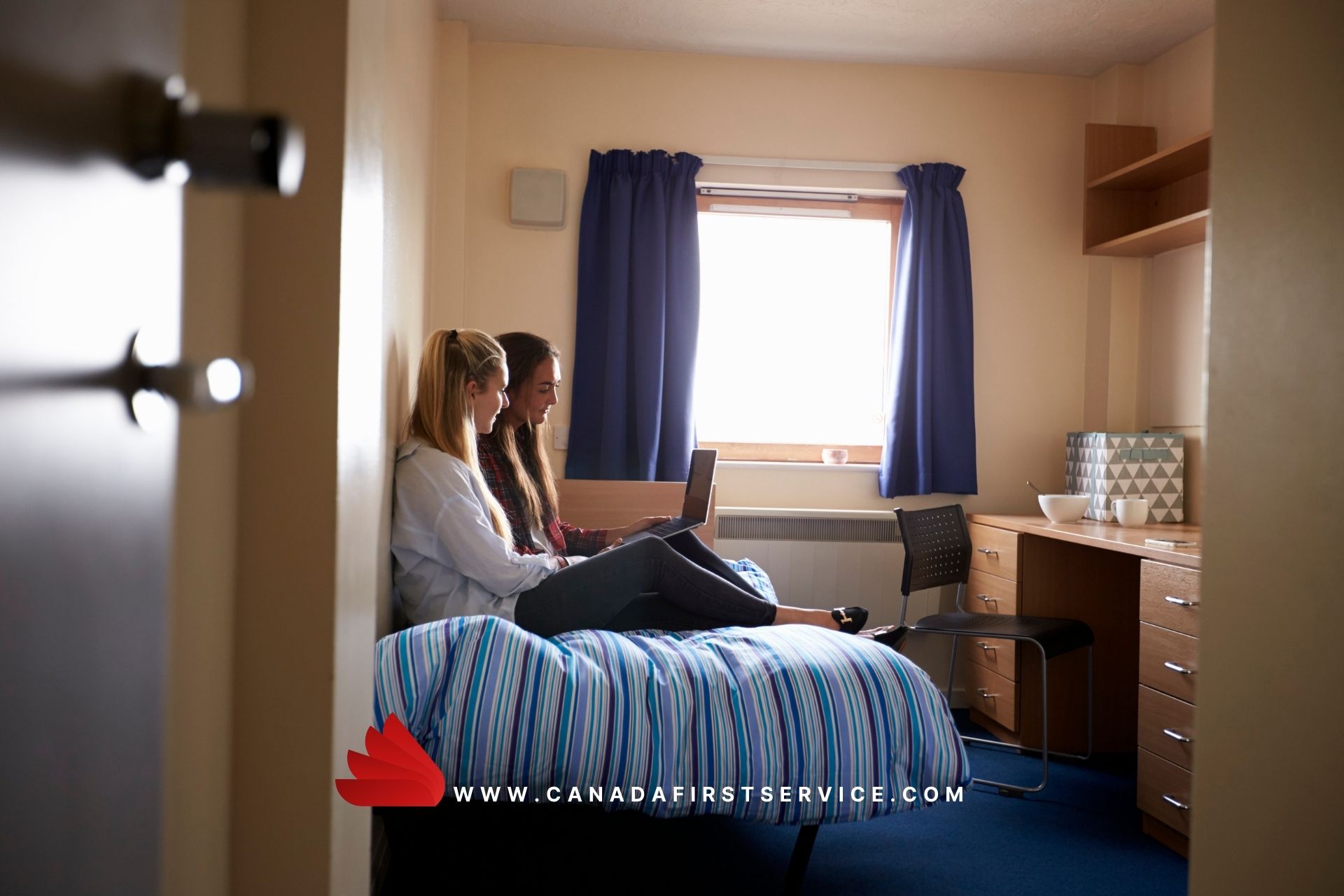
Many universities and colleges offer on-campus residences for students. These are dormitory-style rooms or shared apartments managed by the institution. Some features:
- Proximity: very close to classrooms, libraries, labs, campus services.
- Community: living among mostly students — good for socializing, making friends, and feeling part of the campus community.
- Convenience: often includes utilities, sometimes meal plans, easier for first-time international students who don’t know the city yet.
Cost (approximate): On-campus housing tends to cost — depending on room type and meal-plan options — roughly CAD 3,000 to CAD 8,000 per academic year.
Some sources estimate monthly equivalent of roughly CAD 600 to CAD 1,400, depending on how many months per year the residence is used.
Best for: First-year students, newcomers, students who prefer ease, safety and convenience over independence.
Off-Campus Accommodation
Off-campus accommodation represents the majority of housing for international students in many Canadian cities.
Some common off-campus options:
- Shared apartments / houses (with roommates)
- Private rental apartments or studios
- Privately managed student residences (near university campuses)
- “Co-op housing” or other managed shared living setups (in some cities)
Why go off-campus? More flexibility, greater independence, sometimes more privacy, ability to choose roommates/neighborhoods, often more options for longer-term stays or different housing styles.
Typical costs (shared / private):
- Shared apartments / off-campus shared housing: roughly CAD 600 to CAD 1,600 per month, depending on city and amenities.
- Private rentals / studios or one-bedroom apartments: approx. CAD 1,000 to CAD 2,500 per month, especially in big cities.
Homestays
A homestay involves living with a Canadian family while studying. This is often chosen by first-year international students or people who prefer a more supported living environment. Homestays may include furnished room, meals, and utilities.

Cost (common range): Roughly CAD 400 to CAD 1,200 per month, depending on location, included services, and family arrangements.
Best for: Students wanting cultural immersion, safer transition, help with adaptation/English, and simpler living arrangements without worrying about furnishing or utilities.
Realistic Budget: What to Expect (2024–2025)
Living in Canada as an international student involves more than just rent: food, transportation, utilities, insurance, and other daily expenses add up. According to recent data and guides:
- Overall monthly costs (all expenses combined) for many international students in major Canadian cities range between CAD 1,200 and CAD 2,000, depending on lifestyle.
- For bigger cities (with higher living costs), total monthly expenses — including rent — may be higher.
- Utilities, transportation, groceries, and miscellaneous costs (internet, phone, entertainment) should be carefully considered when budgeting.
What does “rent only” look like (approximate):
Accommodation Type / City Size | Typical Rent (monthly) — shared or private |
Shared off-campus (smaller/affordable cities) | ~ CAD 600–1,200 |
Private apartment / studio (smaller cities) | ~ CAD 1,000–1,800 |
Private apartment / studio (major cities) | ~ CAD 1,500–2,500+ |
Popular Cities for Student Accommodation
While many Canadian cities host international students, some stand out for their popularity, academic institutions, and diverse accommodation options. Let’s look at what to expect in a few of them.
Toronto
- One of the largest concentrations of international students in Canada.
- Accommodation tends to be expensive, especially private rentals. According to recent rent data, average one-bedroom rents in Toronto remain among the highest in Canada.
- Shared housing or on-campus residences may be more affordable, but demand is high — early planning recommended.
Vancouver
- Also a major hub for education and international students.
- Rent is usually high; private rentals and studios in central zones or near universities tend to be at the upper end of the national spectrum.
- Some students opt for shared housing or more affordable neighborhoods farther from the city center to reduce costs.
Montréal
- Among major Canadian cities, Montréal is often cited as more affordable for students living off campus.
- A high share of international students in Montréal live in rented units — reflecting affordability and availability.
- Because cost of living is lower on average compared to Toronto or Vancouver, Montréal attracts many budget-conscious students.
Other Cities (Mid-sized or Smaller):
Cities beyond the big three — like those in less dense provinces — often offer more affordable accommodation. Living costs including rent, utilities, and transport tend to be more manageable.
What to Consider When Choosing Student Accommodation
Choosing accommodation is more than just price. Consider these factors carefully to ensure a comfortable, safe, and suitable living situation:
- Location & proximity to campus: Being close to university or transit can save time and money.
- Cost & overall budget: Rent is just one part — include utilities, food, transport, insurance, and personal expenses when budgeting.
- Safety & neighbourhood vibe: Investigate the area’s safety, public transit, services, and general living environment — especially if you are new to Canada.
- Amenities: Many students care about furnished vs unfurnished rooms, availability of kitchen, laundry facilities, utilities, and Wi-Fi.
- Type of lease / contract: Check whether housing offers fixed-term lease (e.g., 6 months – 1 year) or month-to-month. Understand utilities, deposits, cancellation terms.
- Roommates / shared living: Sharing apartments can greatly reduce costs and provide social support — but ensure compatibility and clarity about shared responsibilities.
- On-campus vs Off-campus tradeoffs: On-campus offers convenience and community — but less privacy and independence. Off-campus offers more freedom, but requires more planning, responsibility, and usually higher budgets.
Recent Trends and What Students Should Know
- The majority of international students in many Canadian municipalities rely on the rental market rather than on-campus housing. For example, in some cities up to ~92% of international students live in rented units.
- Among those renting, many live in shared/roommate households — reflecting affordability strategies.
- According to recent reports (2025), many international students in major Canadian cities should budget CAD 1,200–2,000 monthly for living expenses, including rent, food, transport, and other needs.
- Because of fluctuations in demand (for instance, changes in immigration or student permit policies), some markets have recently seen rent adjustments/changes in availability.
This makes it more important than ever to begin your apartment or housing search early — ideally as soon as you get your admission letter or before.
Practical Tips for Finding Student Accommodation in Canada
Here are actionable strategies to help you secure good accommodation with less stress:
- Start early. On-campus housing fills fast; also, good off-campus apartments or shared flats can get taken quickly, especially before the start of semesters.
- Use official university housing portals or verified platforms. Many institutions provide housing services or partner with trusted housing providers — safer and more reliable than unknown listings.
- Consider shared living to reduce costs. Sharing apartments or houses with roommates can significantly lower rent and utility expenses.
- Check lease terms carefully. Understand lease duration (fixed-term vs month-to-month), what utilities are included, deposit requirements, rules for early termination, and any hidden costs.
- Budget for total living cost — not just rent. Include utilities, food, transportation, insurance, and personal expenses when evaluating affordability.
- Ask for references / reviews when using homestays or private rentals. Look for feedback from previous tenants; verify landlord identity; if possible, ask for photos or virtual tours if you are still abroad.
- Be flexible with location. Living outside city center or near—but not directly inside—campus neighborhoods can offer significant savings, though it may require commuting.
- Prioritize safety and support — especially if first-time international student. On-campus residences or homestays can ease the transition to a new country, especially during the first months.