
Introduction
Moving to Canada often means adjusting to new systems — and the rules around driving are among the most important to understand early. Because Canada is geographically vast and public transit doesn’t reach everywhere, having the ability to drive can significantly ease daily life, especially if you plan to work, study, or settle outside large cities.
This guide is designed specifically for newcomers — whether you’re an international student, a work-permit holder, or a new permanent resident. Here you’ll find everything you need to know: from who can drive, how long you can use a foreign licence, when and how to exchange for a Canadian licence, to car insurance, buying or renting a car, and what to do in case of accidents. If you need personalized support navigating these steps, CanadaFirstService offers free consultation to help you set up properly.
Who Can Drive in Canada — Basic Requirements
To drive legally in Canada, you must have a valid driver’s licence issued by the province or territory where you live.
If you’re newly arrived and hold a valid driver’s licence from your home country (or another country), many provinces allow you to drive temporarily — but only for a limited period.
Also, you must have valid car insurance for the vehicle you drive, whether it’s rented, leased, or owned. Driving without insurance is illegal.
Using a Foreign Licence or International Driving Permit (IDP)
Temporary validity of foreign licences
Depending on your province or territory of residence, the period during which you can use your foreign licence varies. For example:
In Ontario, newcomers have 60 days to drive using a valid foreign or out-of-province licence. After that, you must obtain an Ontario licence.
In many other provinces, the validity ranges between 60 and 90 days — but in some cases (or for certain statuses), this period is different.
Because the rules vary by province, you should always check the official guidance of the province where you settle.
What about an International Driving Permit (IDP)?
An IDP is not a standalone licence, but a translation of your foreign licence (into English and/or French) — useful especially if your home licence is not in English/French.
Many rental companies and authorities recommend holding an IDP along with your original licence (especially early on). But note: an IDP alone does not give you driving rights — you still need a valid licence.
If you plan to stay long-term or become a resident, you’ll almost certainly need to exchange your licence for a provincial one (see next section).
Exchanging Your Licence
Why you need to exchange
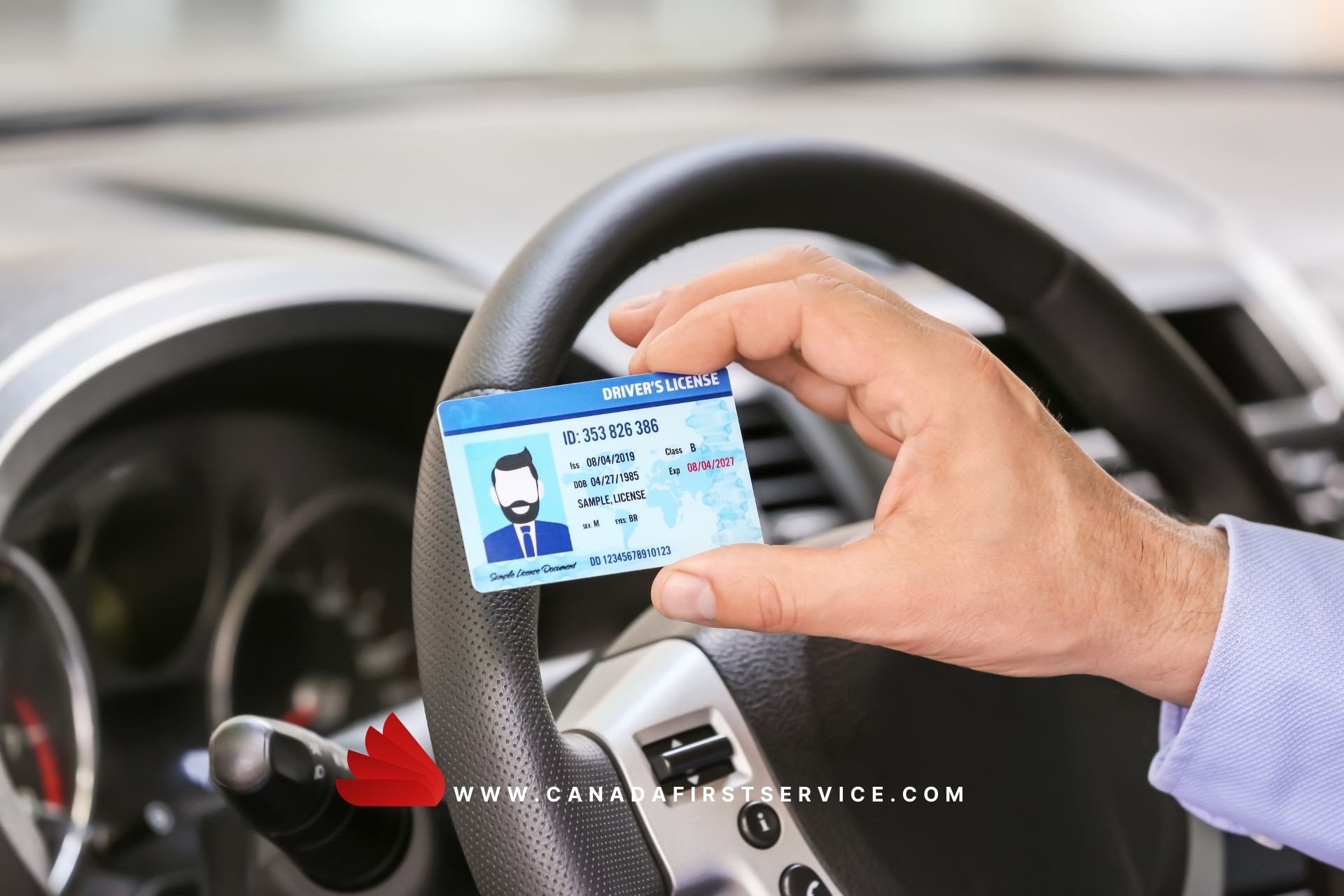
Once the temporary allowance ends (e.g., 60 days in Ontario), foreign licences are no longer valid for residents. To continue driving legally, you must apply for a licence from your province or territory.
How licence-exchange works
Ontario permits licence exchange for many countries and jurisdictions with reciprocal agreements — which allows newcomers to avoid full re-testing if conditions are met (valid licence, acceptable class, proof of driving history).
To exchange, you’ll need: your foreign licence (valid, with expiry date), proof of identity, proof of driving experience (in many cases), and — if your licence is not in English or French — a certified translation.
You might also be required to pass a vision test at a licensing office.
If you have sufficient previous driving experience (often 2+ years), you may be eligible directly for a full licence. If not, you may need to follow a graduated licensing path (knowledge test → road test → full licence).
Situations with no exchange agreement
If your home country or licence-issuing jurisdiction does not have a reciprocal agreement with your province, you may still apply — but you will likely need to complete the full licensing process: written knowledge test, road test, and possibly a waiting/learner period.
Car Insurance — A Must Before Hitting the Road
Driving a vehicle without valid insurance is illegal anywhere in Canada.
As a newcomer, whether you buy, rent, or lease a vehicle — make sure the policy includes liability coverage (injuries / damage to others) and — ideally — comprehensive coverage (for damage to your vehicle).
Because insurance costs vary depending on your province, driving history, age, and other factors, it’s wise to shop around and compare different insurance providers before committing.
Buying, Leasing, or Renting a Car as a Newcomer
Many newcomers choose to buy or rent a car — especially if public transit is limited where they live. Here’s what you should know:
There is no rule preventing newcomers (international students, PRs, work-permit holders) from buying a car in Canada — provided you have the financial means.
If financing via loan: lenders often require proof of identity, residency, possibly credit history or stable income — which can be challenging for new arrivals without Canadian credit history.
Leasing is another option: you pay monthly for use of the vehicle over a fixed period (e.g., 3–5 years), without owning it. Leasing may be easier than financing if you lack credit history — but you don’t build ownership.
Renting cars is generally possible, but rental companies often require you to be above a certain age (often 21 or 25) and have a valid driver’s licence (or foreign licence + IDP) — and sometimes an additional deposit or insurance.
Driving Laws, Safety & What to Do If There’s an Accident
Always have your driver’s licence, proof of insurance, and vehicle ownership/registration with you when driving — police can request them.
In case of accident: stay at scene (if safe), call emergency services (911) if needed, exchange information with other parties (driver’s licence numbers, insurance details, licence-plate, contact info), and report to your insurer. This is especially important if someone else drives your car.
Be aware of road rules: speed limits, seat-belt laws, drink-driving laws, etc. These vary by province and are enforced strictly. As a newcomer, reading the provincial driver handbook is strongly recommended.
Practical Tips for Newcomers
Check the rules for your province as soon as you arrive — validity periods for foreign licences and steps to exchange vary by province.
Start licence-exchange early, especially if you plan to drive long-term. Waiting too long and driving with expired or invalid licence can lead to fines or legal trouble.
Get your documents ready: valid foreign licence, identity proof, residency proof, translation (if needed), and — if required — driving-history verification letter or abstract.
Compare insurance plans — as a newcomer, rates may be higher; bundling insurance with other needs (if available) or choosing safe neighbourhoods/vehicles may lower costs.
If renting or leasing — read the contract carefully. Leasing terms often include conditions (mileage limits, wear and tear, insurance requirements).
Drive safely — especially initially. Canadian weather, especially in winter, can affect driving conditions. Familiarize yourself with defensive driving, road signs, and weather-specific driving rules.