
The FIFA World Cup 2026 is already shaping up to be a tournament unlike any other in football history. For the first time, the world’s biggest sporting event will be hosted by three nations — the United States, Canada, and Mexico — and will feature 48 teams, expanding the global stage like never before.
This new chapter of the World Cup promises record-breaking crowds, new opportunities for fans, and historic firsts that will redefine the future of international football.
A Brief History of the FIFA World Cup
Since its inaugural edition in 1930 in Uruguay, the FIFA World Cup has grown from a modest 13-team competition into a global phenomenon that captures the attention of billions every four years. The idea was simple yet revolutionary — to bring the best national teams together to determine the true world champion of football.
That first tournament, won by host nation Uruguay, set the foundation for what would become the most-watched sporting event on Earth. Over the following decades, the World Cup not only crowned champions but also became a mirror of global culture, politics, and unity.
The 1950s and 1960s saw the rise of Brazil and the emergence of Pelé, whose dazzling performances turned the World Cup into a stage of magic and artistry. In the 1980s, Diego Maradona embodied passion and controversy — from the legendary “Hand of God” goal to his stunning solo effort against England in 1986 — moments that transcended sport itself.
A New Era: Globalization and the Modern World Cup
The 1990s brought a more commercial and modern era. The 1994 World Cup in the United States marked a turning point — it drew record crowds and proved that football could thrive even in markets traditionally dominated by other sports. It was also a symbolic moment of globalization, setting the stage for the sport’s massive commercial growth in the 21st century.
In recent years, the tournament has evolved into a true reflection of football’s diversity. France’s multicultural team in 2018 and Argentina’s emotional triumph in Qatar 2022, led by Lionel Messi, showed how football continues to unite people beyond borders, languages, and generations.
Now, as the world looks toward the 2026 edition, the World Cup is returning to North American soil for the first time in more than three decades. This time, it’s not just coming back — it’s expanding, innovating, and reaching new audiences across three nations. The FIFA World Cup 2026 will not only celebrate football’s glorious past but also signal its bold leap into the future.
Why the FIFA World Cup 2026 Is Different
What truly sets the 2026 World Cup apart is its expanded format and joint hosting arrangement.
The Expansion to 48 Teams
After years of hosting 32-team tournaments, FIFA announced a major change: 48 teams will now compete in 12 groups of four, with the top two from each group and the eight best third-placed teams advancing to a Round of 32.
This means 104 matches in total — up from 64 — making it the largest and longest World Cup in history, spanning 39 days from June 11 to July 19, 2026.
The First-Ever Tri-Nation World Cup
The 2026 edition is the first in history to be co-hosted by three countries. It highlights a new era of collaboration and unity, with each nation bringing its own football culture and infrastructure to the stage.
- United States: 11 host cities, including Los Angeles, New York/New Jersey, Miami, and Seattle
- Canada: Toronto and Vancouver
- Mexico: Mexico City, Guadalajara, and Monterrey
This setup is also seen as a bridge between North and Latin America — regions with rich football legacies and growing fan bases.
Host Countries and Stadium Venues
The United States will host the majority of the matches, including the final at MetLife Stadium in New Jersey. Mexico will make history as the first country to host World Cup matches in three separate tournaments (1970, 1986, and now 2026).
Key Stadiums Include:
- MetLife Stadium (New Jersey, USA) – Final venue
- Azteca Stadium (Mexico City, Mexico) – Historic venue from 1970 & 1986 finals
- SoFi Stadium (Los Angeles, USA)
- BC Place (Vancouver, Canada)
- AT&T Stadium (Dallas, USA)
With a combined capacity of more than 5 million fans across all venues, this will be the most accessible and widely attended World Cup ever.
Tournament Format and Schedule
The FIFA World Cup 2026 will start on June 11, 2026, in Mexico City, and end on July 19, 2026, in New Jersey.
Here’s how the tournament will unfold:
- Group Stage: 12 groups of 4 teams
- Round of 32: An additional knockout round
- Round of 16, Quarterfinals, Semifinals, Final
The expansion allows more nations — especially from Africa, Asia, and North America — to compete on the world stage. This change is expected to strengthen football’s global presence and provide more opportunities for emerging teams to shine.
Teams Qualified So Far and the Road to 2026
As of October 2025, 28 teams have officially qualified for the 2026 World Cup. The remaining slots will be filled through regional and intercontinental playoffs by March 2026.
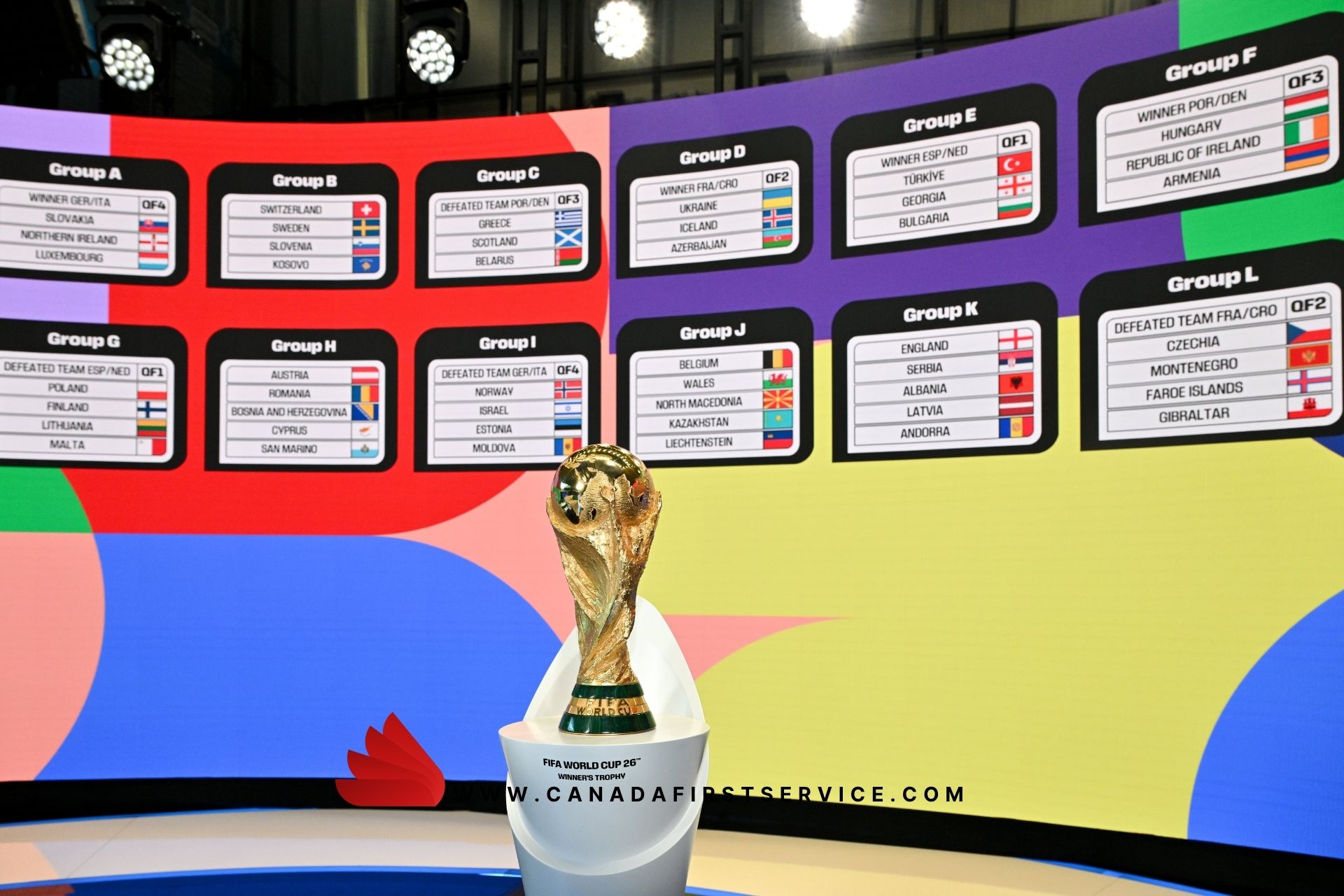
Confirmed Teams Include:
- Hosts: Canada, Mexico, USA
- Europe: England
- South America: Argentina, Brazil, Colombia, Uruguay, Ecuador, Paraguay
- Africa: Morocco, Senegal, Egypt, Ghana, Algeria, Tunisia, Ivory Coast, South Africa
- Asia: Japan, South Korea, Iran, Saudi Arabia, Qatar, Australia, Uzbekistan, Jordan
- Oceania: New Zealand
(Source: Al Jazeera Sports, 2025)
The tournament’s qualifying system reflects the sport’s growing balance — giving more nations from every continent a fair shot at global glory.
Why This World Cup Will Be Historic Beyond Football
The FIFA World Cup 2026 isn’t just about more teams and cities — it’s also a symbol of progress.
- Economic Impact: The 2026 tournament is projected to generate over $10 billion USD in revenue for North America, according to FIFA.com.
- Sustainability Focus: Several stadiums feature renewable energy systems and advanced cooling technologies.
- Cultural Diversity: Fans from around the world will experience a mix of American entertainment, Canadian hospitality, and Mexican football passion.
This unique combination will make 2026 more than a sporting event — it will be a global celebration of culture, unity, and innovation.